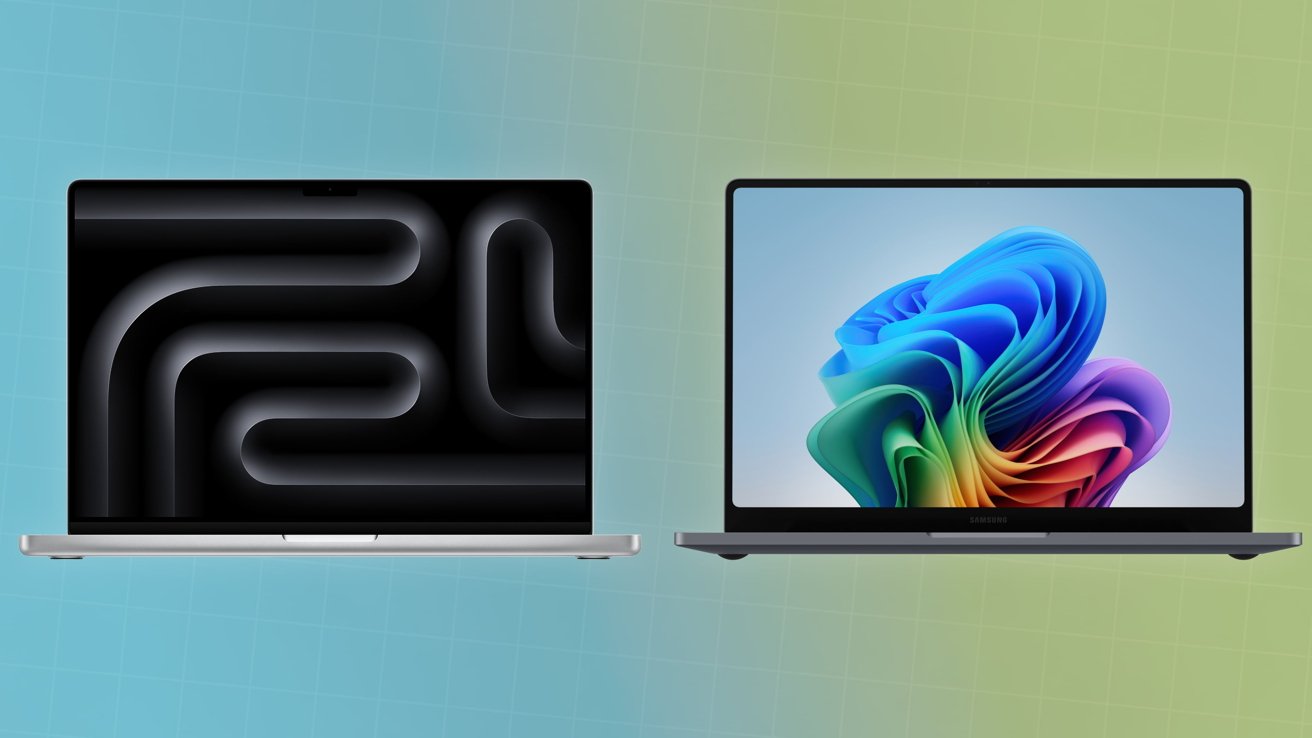
Samsung's Galaxy Book6 Ultra is the latest attempt to take the thin-and-light workstation crown away from Apple's MacBook Pro. There is a clear winner.
The premium notebook market is highly competitive, and Apple has been a big part of that particular industry for decades. The MacBook Pro is synonymous with the concept, being an aluminum-clad slab of portable computing for power users on the go.
Many have tried to emulate Apple's aesthetic, and with some success, too. Even rival companies like Samsung have gone down a similar route with their premium notebooks.
The Galaxy Book6 Ultra is one such effort. Part of the Book6 line, the Ultra is the high-performance tier in the collection.
It's only natural for it to be put against the 16-inch MacBook Pro, and to put the most expensive $3,799 option from Samsung's website against a similarly-priced MacBook Pro.
That happens to be the cheapest M5 Max 16-inch MacBook Pro, at $3,899.
M5 Max 16-inch MacBook Pro vs Samsung Galaxy Book6 Ultra: Specifications
| Specifications | M5 Max MacBook Pro (16-inch, 2026) | Samsung Galaxy Book6 Ultra (16-inch) |
|---|---|---|
| Launch Starting Price | $3,899 | $2,899.99 |
| Comparison Price | $3,899 | $3,799.99 |
| Dimensions (inches) | 14.01 x 9.77 x 0.66 | 14.05 x 9.76 x 0.61 |
| Weight (pounds) | 4.7 | 4.2 |
| Display | 16.2-inch Liquid Retina XDR, Wide Color (P3) True Tone ProMotion, Nano-texture (optional) | 16.0 AMOLED, Touch support, Vision Booster, Adaptive 30Hz to 120Hz |
| Resolution | 3,456 x 2,234 | 2,880 x 1,800 |
| Brightness | 1,000 nits sustained fullscreen, 1,600 nits peak HDR, 1,000 nits SDR | 500 nits SDR, 1,000 nits HDR |
| Processor | Apple M5 Max 18-Core | Intel Core Ultra X7 358H Intel Core Ultra 7 356H |
| Graphics | 32-core GPU, 40-core GPU | Nvidia GeForce RTX 5060, Nvidia GeForce RTX 5070, |
| Memory | 36GB (32-core GPU), 48GB (40-core GPU), 64GB (40-core GPU), 128GB (40-core GPU) | 32GB |
| Storage | 2TB, 4TB, 8TB | 1TB |
| Battery | 100Wh lithium-polymer | 80.20Wh |
| Networking | Wi-Fi 7 Bluetooth 6 | Wi-Fi 7, Bluetooth 5.4 |
| Biometric | Yes, Touch ID | Yes, Windows Hello |
| Camera | 12MP Center Stage camera with Desk View | 2MP 1080p |
| Audio | Six-speaker sound system, Force-cancelling woofers, Three-mic array with directional beamforming and high signal-to-noise ratio, Headphone jack with high-impedance headphone support, Dolby Atmos support with Spatial Audio | Six speakers, Dolby Atmos, Dual array digital microphones, Headphone jack |
| Ports | Three Thunderbolt 5 ports, SDXC Card Slot HDMI 3.5mm headphone, MagSafe 3 | Two Thunderbolt 4 ports, USB Type-A HDMI 2.1 3.5mm headphone, SD card reader |
M5 Max 16-inch MacBook Pro vs Samsung Galaxy Book6 Ultra: Design, weight, size
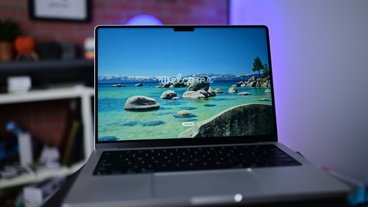
The 16-inch MacBook Pro uses Apple's well-worn design that has hung around for multiple generations. Using an aluminum enclosure, it is sold in a choice of Space Black or Silver colorways.
Samsung follows a similar route, with a thin and light notebook using a metal body. It's a nondescript design that ships only in the color Gray, but it does benefit from a larger touchpad than the MacBook Pro.
When it comes to physical dimensions, the footprints are actually very close. The MacBook Pro is 14.01 inches by 9.77 inches, while the Galaxy Book6 Ultra is 14.05 by 9.76 inches.
At 0.66 inches thick, the MacBook Pro is a bit chunkier than the 0.61-inch-thick Book6, but not by much.
What is less debatable is weight, as the 4.7-pound MacBook Pro is hefty in comparison to the 4.2-pound Ultra. Half a pound isn't a massive amount of difference, but it can mean the world to someone who has to carry it around every day.
M5 Max 16-inch MacBook Pro vs Samsung Galaxy Book6 Ultra: Display
The MacBook Pro has a 16.2-inch Liquid Retina XDR Display, which is a mini-LED-based backlit screen. It's a display tech that is expected to be replaced by OLED in the future, but it still does a pretty good job now.
Samsung opts for a 16-inch AMOLED 2X screen, which helps with contrast and color representation.
On resolution, the 16-inch MacBook Pro is set at 3,456 by 2,234 pixels. By contrast, the 2,880 by 1,800 resolution of the Book6 Ultra is good, but nowhere near what Apple provides.
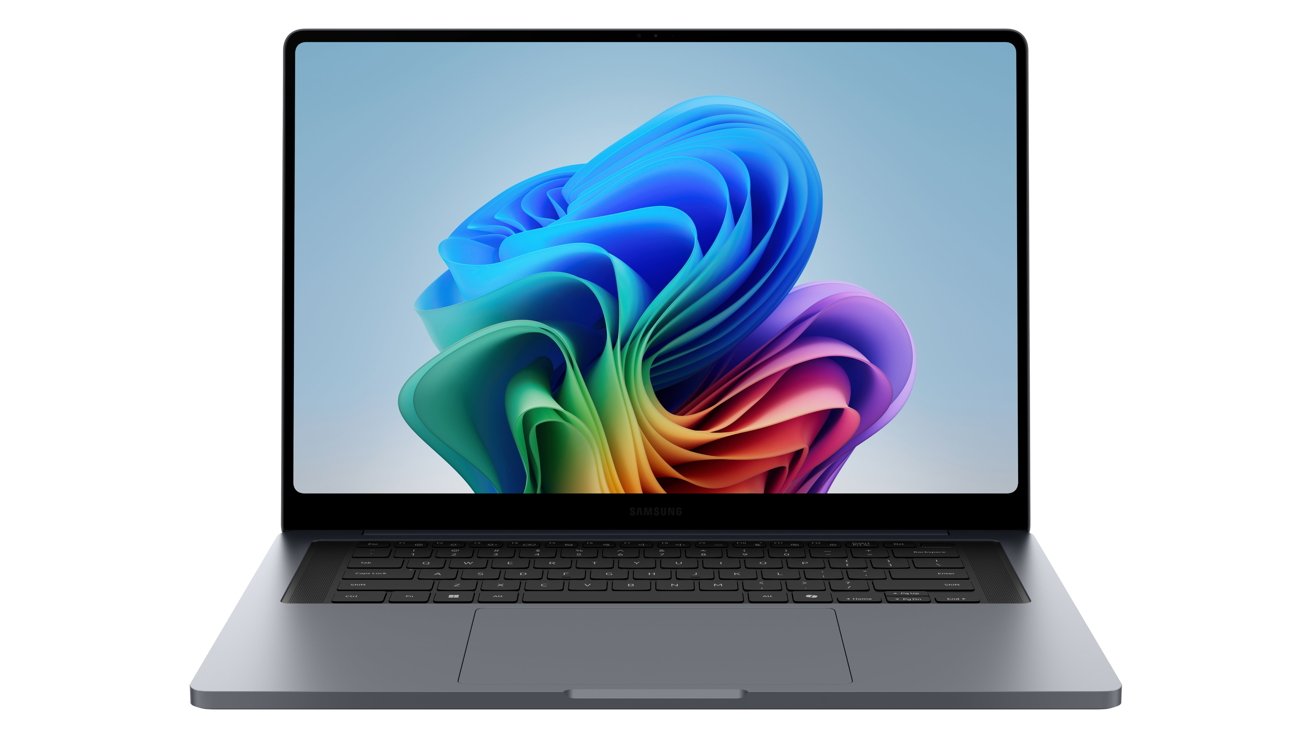
M5 Max 16-inch MacBook Pro vs Samsung Galaxy Book6 Ultra: The Book6 Ultra from the front
When it comes to brightness, Samsung manages up to 1,000 nits for HDR content, and up to 500 nits for SDR. That screen also has a True Bright 1300 certification when it comes to clarity and vibrancy.
Apple, meanwhile, can kick out up to 1,000 nits for SDR content, up to 1,000 nits sustained for full-screen content, and 1,600 nits at its peak. Likewise, there's support for 1 billion colors and the P3 color gamut.
Both models have adaptive frame rates, with Promotion and Samsung's solutions reaching up to 120Hz.
Apple does pull ahead with the option to add a Nano-texture effect to the glass to minimize glare. Samsung, meanwhile, leans on its scratch resistance through the use of Corning Gorilla Glass with DXC.
Both have their own respective adaptive color systems that change the display based on the local environment's lighting. Apple calls its one True Tone, while Samsung goes for Vision Booster.
M5 Max 16-inch MacBook Pro vs Samsung Galaxy Book6 Ultra: Performance
The M5 Max is Apple's current-fastest chip range, in lieu of an M5 Ultra for the moment.
It is an 18-core CPU with six "super cores," which Apple said was the world's fastest CPU core at launch, and 12 "performance cores."
That's accompanied by a GPU with either 32 or 40 cores, with Apple adding a Neural Accelerator in each GPU core. This change is a big one for AI task processing, since it goes beyond the existing 16-core Neural Engine that's also included.
Memory bandwidth ranges from 460GB/s or 612GB/s, depending on the GPU core count.
In the Book6 Ultra, Samsung includes a choice of either the Intel Core Ultra X7 358H chip or the Intel Core Ultra 7 356H. For this comparison's purposes, due to trying to match price, we are covering the upper model of the two.
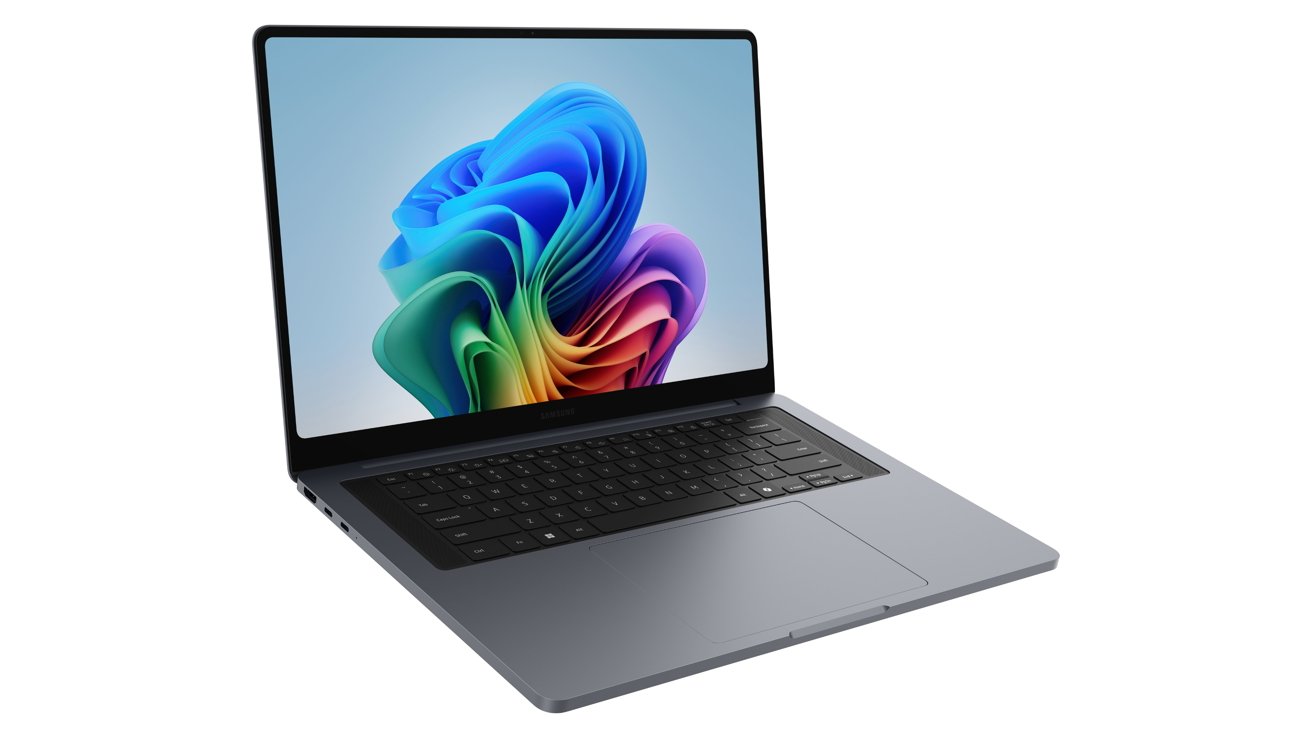
M5 Max 16-inch MacBook Pro vs Samsung Galaxy Book6 Ultra: The Intel Core Ultra 7 356G is good, but not M5 Max good.
Likewise, for even pricing, the MacBook Pro is being considered with the lower-tier M5 Max chip.
The Intel Core Ultra 7 356H is part of Intel's Core Ultra Series 3 processors, formerly known as Panther Lake. It has 16 cores in total, broken down into four performance cores at 4.7GHz, eight efficiency cores at 3.5GHz, and four low-power efficiency cores at 1.5GHz.
There's also an included NPU, which can operate at 50 TOPS (trillion operations per second) on its own.
For comparison, the M4's Neural Engine operated at up to 38 TOPS. There are no reliable numbers when it comes to the TOPS value for the M5 Max, but reports indicate it is in the triple digits.
The upper Intel chip in Samsung's configurator also includes two GPU choices: The Nvidia GeForce RTX 5060 or RTX 5070. For this comparison, we're going to use the RTX 5070.
For memory, Samsung lists just the 32GB of LPDDR5X, though the launch included options for 16GB to 64GB, with availability depending on model and territory.
Apple starts its unified memory options with 36GB for the 32-core GPU chip, but the 40-core includes 48GB, 64GB, and 128GB options.
When it comes to benchmarks, we turn to Geekbench.
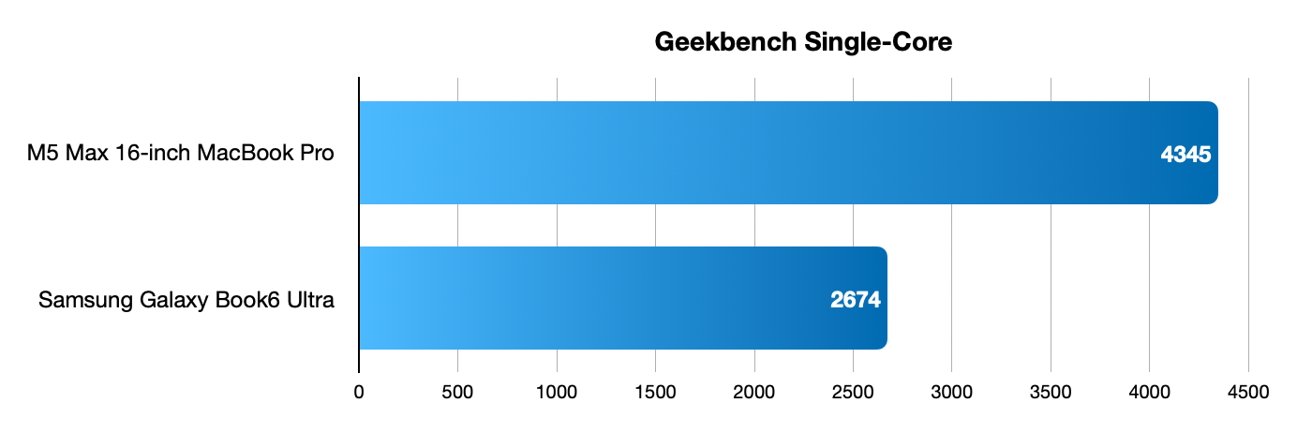
M5 Max 16-inch MacBook Pro vs Samsung Galaxy Book6 Ultra: Geekbench single-core scores
For single-core performance, the MacBook Pro hammers out an impressive 4,345 points. By contrast, the results for the Galaxy Book6 Ultra is a lot lower in the 2,700 range.
The performance disparity is also reflected in the multi-core results. The M5 Max gets above 30,000, while Samsung's notebook reports not much more than 15,000.
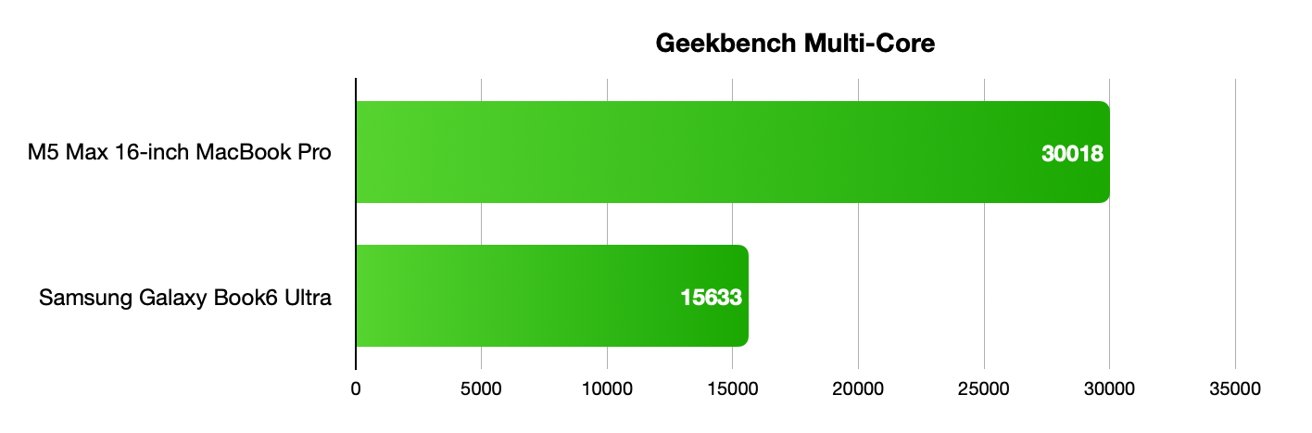
M5 Max 16-inch MacBook Pro vs Samsung Galaxy Book6 Ultra: Geekbench multi-core scores
The answer to this lies a bit in the core make-ups, rather than the counts. Remember that Intel's chip not only has slightly fewer cores in total, but only four of them are classed as performance cores.
By contrast, Apple's use of the so-called "super" cores and making the rest up with performance cores certainly works in its favor here.
It's a much closer race when it comes to graphical performance, though. The Geekbench results for the Book6 Ultra with the RTX 5070 have scores that are around 118,000, while the 36-core GPU version of the M5 Max is still higher at over 123,000.
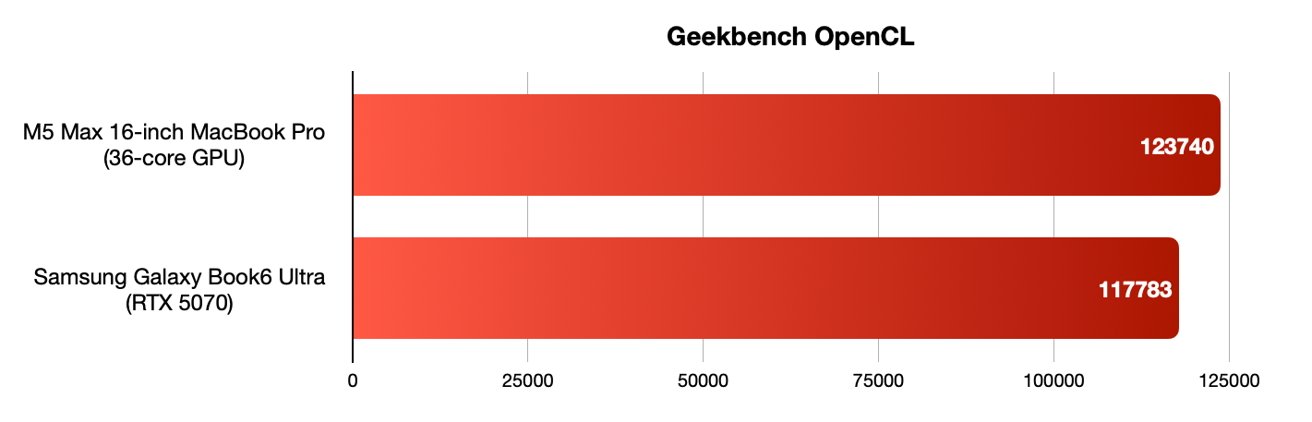
M5 Max 16-inch MacBook Pro vs Samsung Galaxy Book6 Ultra: Geekbench OpenCL scores
It's good to remember here that we're talking about Apple's own-designed GPU included on the chip, versus a discrete GPU included in the Samsung notebook. Apple's effectively integrated GPU has outperformed the usually extremely powerful discrete counterpart, which highlights Apple's chip design expertise.
M5 Max 16-inch MacBook Pro vs Samsung Galaxy Book6 Ultra: Ports and connectivity
When it comes to connectivity, there's a bit of similarity between the two, in that there's Wi-Fi 7 support in both models. There's a difference in Bluetooth, though, as the MacBook Pro takes the lead with Bluetooth 6 support versus Bluetooth 5.4.
These do require you to have access to supportive network infrastructure and Bluetooth devices to get the most out of each of them.
For physical connectivity, the two also fall into the bare essentials side of things. You get enough to get things done, but no more.
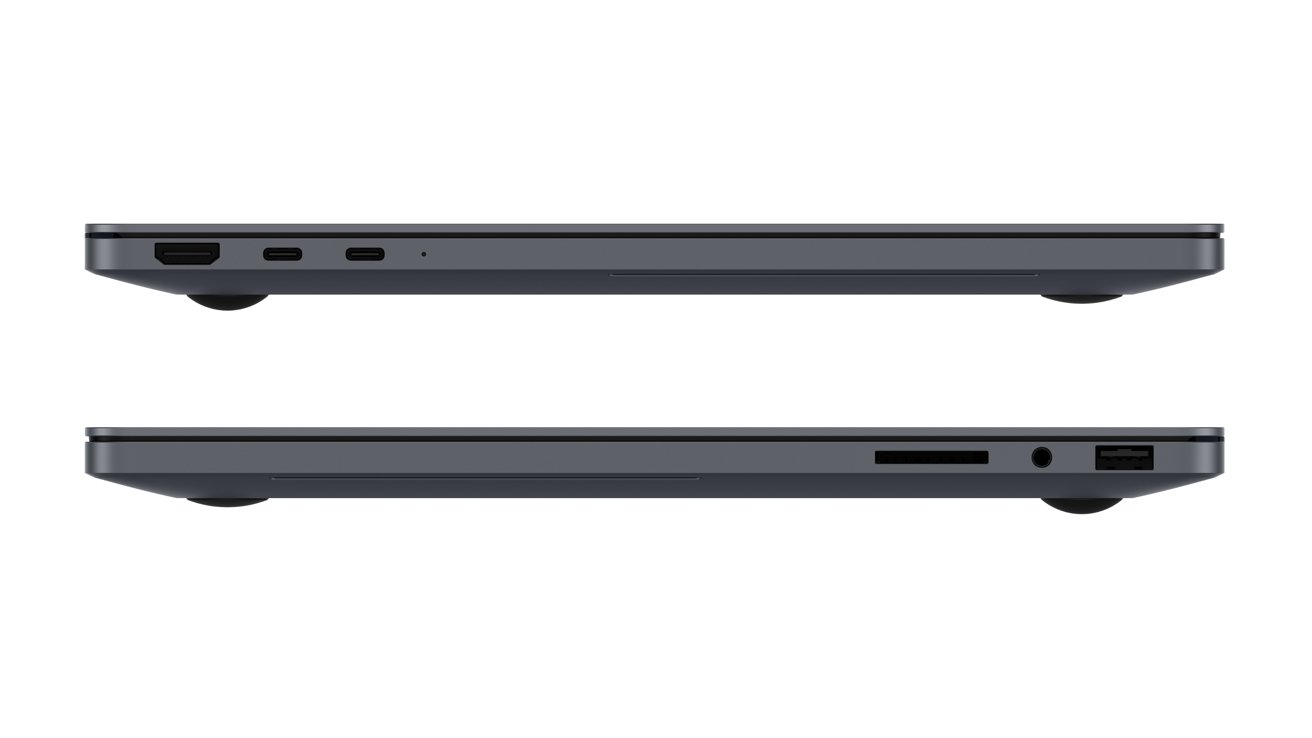
M5 Max 16-inch MacBook Pro vs Samsung Galaxy Book6 Ultra: The Book6 Ultra's side ports
That consists of three Thunderbolt 5 ports on the MacBook Pro, as well as an SDXC memory card slot, HDMI, and a 3.5mm headphone jack. There's also a MagSafe 3 connection for power.
Samsung instead uses two Thunderbolt 4 ports and one USB Type-A connection. This is probably as useful as Apple's selection, if not necessarily as blisteringly fast.
There's also an HDMI 2.1 port on the Book6 Ultra, as well as a 3.5mm headphone jack and an SD card reader.
M5 Max 16-inch MacBook Pro vs Samsung Galaxy Book6 Ultra: Audio and camera
When it comes to playing audio, both have decent sound systems.
Samsung includes a six-speaker setup with Dolby Atmos support, complete with four force-cancelling woofers and two tweeters. This is similar to the MacBook Pro, which uses six speakers, including force-cancelling woofers, and has Dolby Atmos support with Spatial Audio.
To capture audio, there is a dual-array of digital microphones on Samsung's side. Apple uses a three-mic array complete with a high signal-to-noise ratio and directional beamforming.
Both also have headphone jacks, but Apple's includes high-impedance headphone support.
On the camera side, Apple includes a 12-megapixel Center Stage camera with Desk View. Samsung includes its own 2MP camera capable of a 1080p feed, with it also powering Windows Hello biometric support.
Samsung's camera will do well enough for calls. However, Apple's reframing and Desk View features give you many more options in video conferences.
M5 Max 16-inch MacBook Pro vs Samsung Galaxy Book6 Ultra: Battery and storage
The 16-inch MacBook Pro is equipped with a 100Wh lithium-polymer battery. According to Apple, it can last for up to 22 hours of video streaming and 16 hours of wireless web access.
Samsung includes an 80.20Wh battery in its Book6 Ultra. This is claimed to provide up to 30 hours of video playback from a single charge.
On the storage side, Samsung's website lists the Galaxy Book6 Ultra as having 1TB of storage, with no configuration options. However, at launch, it said that there were options for between 512GB and 2TB of SSD storage, with an additional expansion slot.
The MacBook Pro, meanwhile, starts the M5 Max at a minimum of 2TB, with 4TB and 8TB options also available.
M5 Max 16-inch MacBook Pro vs Samsung Galaxy Book6 Ultra: Which to buy
This comparison was produced on the basis of comparing a similarly-priced MacBook Pro against Samsung's most expensive configuration of Galaxy Book6 Ultra from its own website.
While there's still a $100 difference between the two, it's safe to say that the MacBook Pro is the better choice in a number of ways.
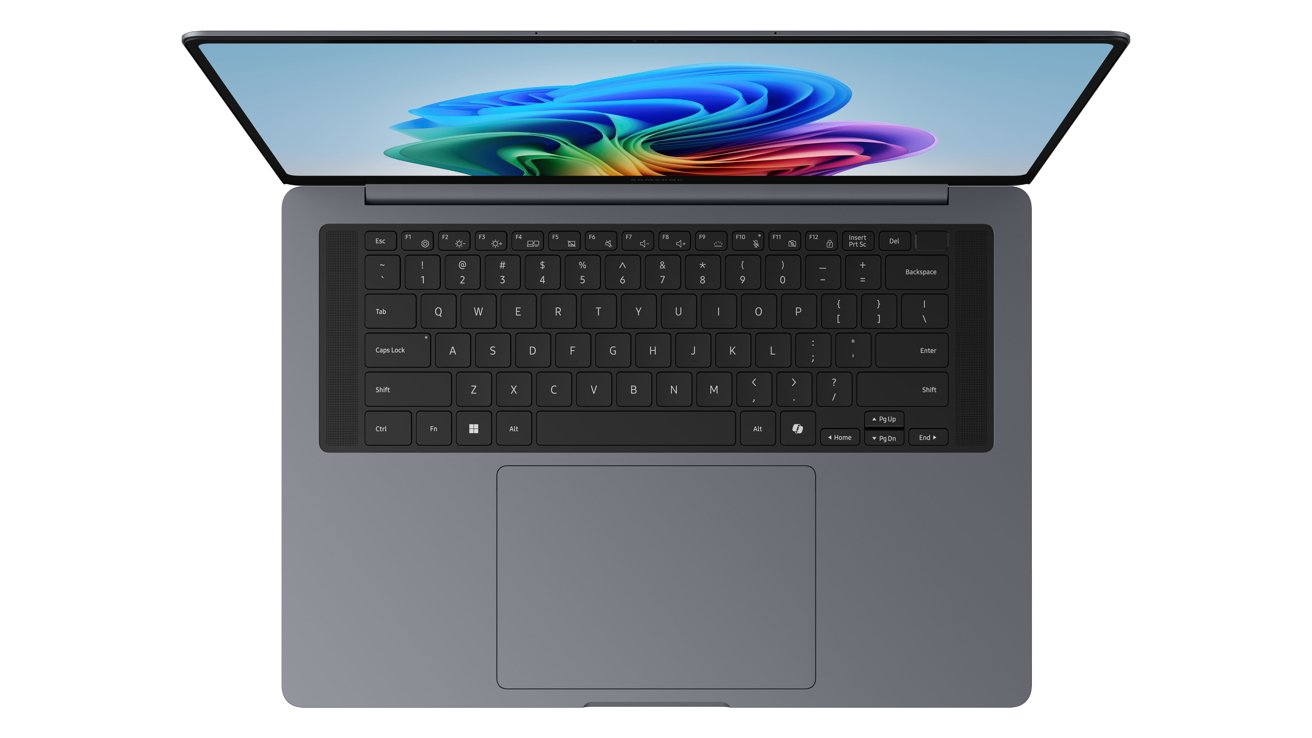
M5 Max 16-inch MacBook Pro vs Samsung Galaxy Book6 Ultra: Samsung includes a very large trackpad.
Ignoring the reasons why Samsung severely limited the configuration options on its website, what was left as the top option was a pretty powerful package for the price. You certainly get a lot of premium Windows notebook for $3,799.
The problem it has is that the lowest-specification 16-inch MacBook Pro with M5 Max is similar cost at $3,899, but offers masses more for the money.
Performance-wise, the CPU is miles ahead in the MacBook Pro compared to what Samsung includes. Graphical performance is much closer, but again leans more in Apple's direction, too.
While memory is comparable at this price point, you also get more storage with Apple's notebook. It's an unusual thing to observe, considering the usual tropes of expensive storage, but it's certainly something that helps Apple's case.
What Samsung has produced is a perfectly good notebook for Windows users. Its problem is that Apple has created something better for practically the same budget.
Where to buy the M5 Max 16-inch MacBook Pro vs Samsung Galaxy Book6 Ultra
The Galaxy Book6 Ultra equipped with Intel's Core Ultra 7 356H processor and Nvidia GeForce RTX 5070 graphics sells for $3,799.99, but it's currently on sale for $3,699.99 at Samsung.com.
Samsung is also offering trade-in offers of up to $400 for qualifying devices.
Apple's 16-inch MacBook Pro with the M5 Max chip with an 18-core CPU, 32-core GPU, 36GB of RAM, and a 2TB SSD is on sale for $3,649 at press time at both B&H Photo and Expercom. B&H's deal is in the form of an instant rebate stacked with an in-cart coupon.
- Buy M5 Max 16-inch MacBook Pro at B&H
- Buy M5 Max 16-inch MacBook Pro at Expercom
- Buy M5 Max 16-inch MacBook Pro at Amazon
The prices above are subject to change, but you can check the latest offers across every configuration in our M5 Max MacBook Pro 16-inch Price Guide.